
Respiratory Muscle Strength Training

Respiratory Muscle Strength Training (RMST) is a specialized form of exercise aimed at improving the strength and endurance of the muscles involved in breathing, including the diaphragm, intercostal muscles (between the ribs), and abdominal muscles. RMST typically involves targeted exercises and the use of resistance devices that create resistance to breathing, which can enhance both inspiratory (breathing in) and expiratory (breathing out) muscle strength.
Here’s how RMST works:
Inspiratory Muscle Training (IMT): Focuses on strengthening the muscles that help with inhalation, like the diaphragm and external intercostal muscles. IMT often involves a device that restricts airflow as a person inhales, forcing them to work harder.
Expiratory Muscle Training (EMT): Focuses on strengthening the muscles used in exhalation, like the abdominal muscles and internal intercostal muscles. Devices for EMT create resistance to airflow during exhalation.
Respiratory Muscle Strength Training (RMST) can improve sleep and brain function by enhancing oxygenation, reducing stress, and promoting better sleep. Here are some ways RMST supports sleep and brain health:
Improved Upper Airway Stability: Strengthening the breathing muscles, particularly those in the upper airway, can help prevent airway collapse during sleep, a common issue in obstructive sleep apnea. By increasing the tone and endurance of these muscles, RMST is being studied for its potential to help keep the airway more stable and reduce the frequency and severity of apneic events.
Enhanced Effectiveness of CPAP Therapy: For those using Continuous Positive Airway Pressure (CPAP) therapy, RMST can support and enhance CPAP effectiveness by improving respiratory function, which may result in a more comfortable and efficient treatment experience. Strengthened muscles may also help users to use lower CPAP pressures, making the therapy more manageable.
Reduced Daytime Fatigue and Improved Sleep Quality: With stronger respiratory muscles, patients may experience fewer disruptions in their sleep, leading to better sleep continuity and quality. Consolidated sleep can translate into reduced daytime fatigue, improved cognitive function, and improved quality of life.
Increased Oxygen Delivery: RMST strengthens the respiratory muscles, improving breathing efficiency. This can enhance oxygen delivery to the brain, which supports cellular function and energy production in neurons. Optimal oxygen levels are essential for memory, attention, and processing speed.
Improved CO₂ Regulation and Acid-Base Balance: CO₂ regulation is primarily governed by breathing rate and depth rather than muscle strength, so this connection to RMST specifically is speculative rather than established.
Enhanced Endurance and Physical Stamina: Improved respiratory muscle strength through RMST can also support physical activity by reducing the perceived effort of breathing during exertion.
Improved Mood and Cognitive Resilience: Some people report a sense of calm or improved focus with regular breathing-based training, though a direct effect of RMST on serotonin or dopamine levels hasn't been established.
By strengthening the respiratory muscles, RMST offers benefits beyond pulmonary health, positively impacting cognitive and sleep functions and overall well-being.

EMST 150
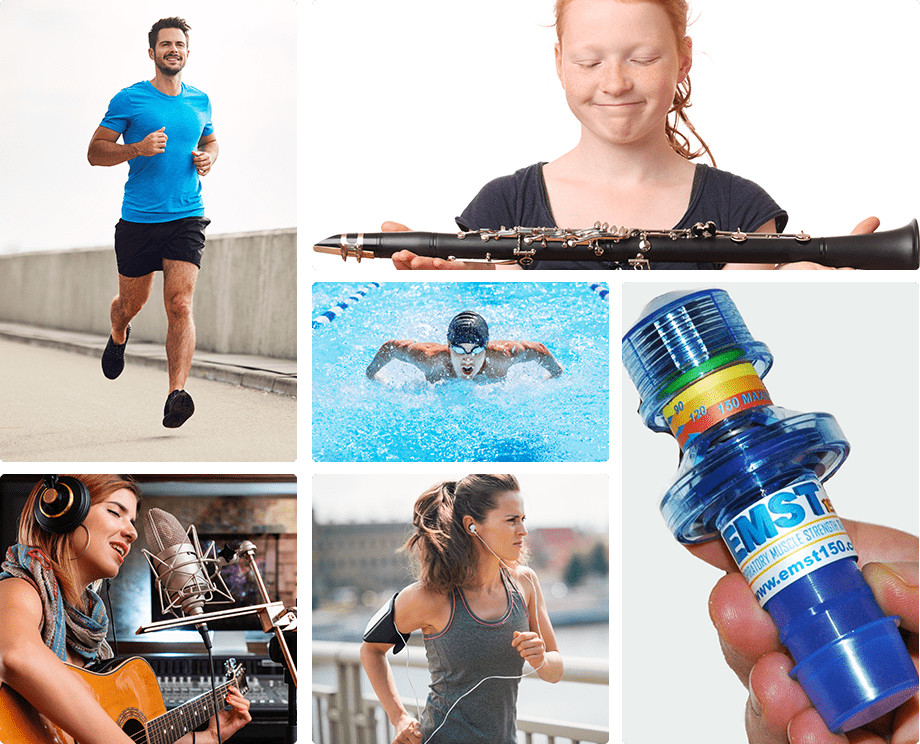
Sleep and Brain utilizes the EMST 150, the most clinically validated expiratory muscle strength trainer, to address weakened respiratory muscles that may contribute to a person’s likelihood of suffering from Obstructive Sleep Apnea (OSA).
Weakened expiratory muscles may contribute to reduced upper airway tone, one of several factors involved in OSA.The EMST 150 is proven to strengthen these essential respiratory muscles, possibly reducing or eliminating this common form of Sleep Apnea. may contribute to reduced upper airway tone, one of several factors involved in OSA. The EMST 150 is proven to strengthen these respiratory muscles; its effect on reducing OSA severity is an active area of research rather than an established, guaranteed outcome.
The EMST is a pressure threshold device. Pressure threshold devices require you to generate sufficient pressure to open the one-way spring-loaded valve contained within the training device. The amount of pressure needed to open the one-way valve is adjusted using a knob at the top of the device. A color-coded label next to the knob label shows the approximate amount of pressure required to open the valve. If you do not generate enough pressure to open the valve, the device will be silent, and it will feel as if you are trying to exhale or inhale while holding your breath. If you generate enough pressure to open the valve, you can exhale or inhale and hear an air-release hissing sound from the device.
The EMST 150's design uses a unique, calibrated pressure relief valve that creates an isometric load on the muscles for coughing, swallowing, and breathing. This is similar to the experience that occurs when you lift weights to strengthen muscles in other parts of your body. It uses the same principle as the weight machines in the gym. The EMST 150 is quite simply your hand-held "weight machine."
The EMST 150 can be carried anywhere and used anytime to improve and maintain muscle strength even after your initial training. It is calibrated so you can measure your progress over time as you progress to higher levels of ability, just like lifting weights. The calibration on the EMST150 is adjustable from 30-150 cm of water, allowing for a safe and full range of use as the breathing, swallowing, cough, and voice strength increases during your training program. This calibration feature allows you to measure your progress over time accurately. The EMST 150 device is lightweight and compact and can travel anywhere with you, in your gym bag, handbag, or briefcase, or you can use it in the comfort of your home.

EMST 75
The EMST 150 and EMST 75 are pressure threshold devices for training and strengthening your expiratory muscles. The significant difference lies in the threshold range – the EMST 75 provides an easier starting point due to the range of 0 to 75 cm of water compared to the EMST 150's range of 30 to 150 cm of water. If you have weakened and compromised respiratory muscle strength, start with the EMST 75 and progress accordingly. The EMST 75 helps increase the strength of your expiratory muscles at a lower threshold than the EMST 150.
Based on your MEP and MIP, you may benefit from training the inspiratory and expiratory muscles with the EMST 150. Inspiratory muscle strength training strengthens the inspiratory muscles, the muscles that you use to breathe in, thereby improving lung function and overall respiratory strength. Additionally, inspiratory muscle strength training enhances physical performance and increases physical endurance.

IA 150
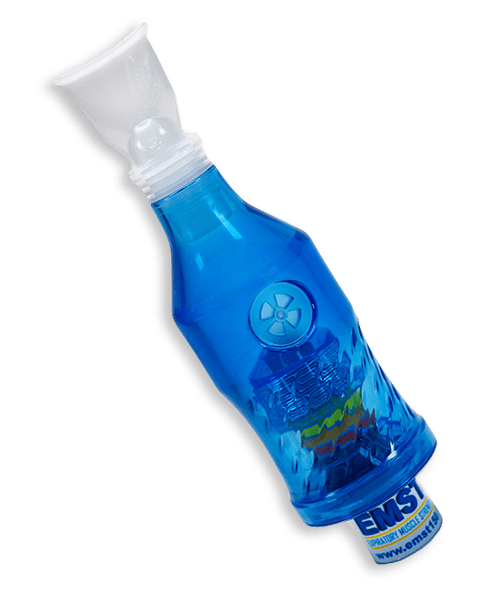
Inspiratory training with the EMST 150 or EMST 75 is achieved by simply attaching the available IA 150 Adapter to the device, making the one device capable of providing expiratory and inspiratory muscle strength training.
How to use the EMST 150 Video
How to use the IA 150 Video
Frequently Asked Questions
-
Cavalcante-Leao, B. L., Porporatti, A. L., Cíntia Felicio Adriano, R., Santos, R. S., Vanelli, M. I., Perez, I., Miranda de Araújo, C., Stechman-Neto, J., & Zeigelboim, B. S. (2024). Effects of respiratory exercises in sleep bruxism and associated obstructive sleep apnea: a double-blind, placebo-controlled randomized clinical trial. Acta odontologica Scandinavica, 83, 120–125. https://doi.org/10.2340/aos.v83.40252
Erturk, N., Yaman, H., Kahraman Yaman, S., Celik, A., Unal, F., Calik Kutukcu, E., & Calik Kutukcu, E. (2024). The effect of expiratory muscle strength training on oxidative stress and functional exercise capacity in patients with obstructive sleep apnea syndrome. European Journal of Preventive Cardiology, 31(Supplement_1), zwae175.432. https://doi.org/10.1093/eurjpc/zwae175.432
Erturk, N., Celik, A., Kahraman Yaman, S., Yaman, H., Unal, F., & Calik Kutukcu, E. (2024). Expiratory muscle strength training reduces oxidative stress and systemic inflammation in men with obstructive sleep apnea syndrome: A double-blinded, randomized parallel trial. Sleep, zsae221. https://doi.org/10.1093/sleep/zsae221
Erturk, N., Celik, A., & CalikKutukcu, E. (2023). High- and low-intensity expiratory muscle strength training in patients with severe obstructive sleep apnea syndrome using non-invasive mechanical ventilation: A double-blinded, randomized controlled trial. Heart & Lung, 61, 29–36. https://doi.org/10.1016/j.hrtlng.2023.03.009
Torres-Castro, R., Solis-Navarro, L., Puppo, H., Alcaraz-Serrano, V., Vasconcello-Castillo, L., Vilaró, J., & Vera-Uribe, R. (2022). Respiratory muscle training in patients with obstructive SLEEP APNOEA: A systematic review and meta-analysis. Clocks & Sleep, 4(2), 219–229. https://doi.org/10.3390/clockssleep4020020
Kuo, Y. C., Song, T. T., Bernard, J. R., & Liao, Y. H. (2017). Short-term expiratory muscle strength training attenuates sleep apnea and improves sleep quality in patients with obstructive sleep apnea. Respiratory Physiology & Neurobiology, 243, 86-91. https://doi.org/10.1016/j.resp.2017.05.007
-
Silva de Sousa, A., Pereira da Rocha, A., Brandão Tavares, D. R., Frazão Okazaki, J. É., de Andrade Santana, M. V., Fernandes Moça Trevisani, V., & Pereira Nunes Pinto, A. C. (2024). Respiratory muscle training for obstructive sleep apnea: Systematic review and meta‐analysis. Journal of Sleep Research, 33(3), e13941.https://onlinelibrary.wiley.com/doi/abs/10.1111/jsr.13941
Torres-Castro, R., Solis-Navarro, L., Puppo, H., Alcaraz-Serrano, V., Vasconcello-Castillo, L., Vilaró, J., & Vera-Uribe, R. (2022). Respiratory Muscle Training in Patients with Obstructive Sleep Apnoea: A Systematic Review and Meta-Analysis. Clocks & Sleep, 4(2), 219-229. https://doi.org/10.3390/clockssleep4020020
Erturk, N., Calik-Kutukcu, E., Arikan, H., Savci, S., Inal-Ince, D., Caliskan, H., ... & Ardic, S. (2020). The effectiveness of oropharyngeal exercises compared to inspiratory muscle training in obstructive sleep apnea: A randomized controlled trial. Heart & Lung, 49(6), 940-948.
Nóbrega-Júnior, J. C. N., Dornelas de Andrade, A., Andrade, E. A. M. de, Andrade, M. do A., Ribeiro, A. S. V., Pedrosa, R. P., … Lima, A. M. J. de. (2020). Inspiratory Muscle Training in the Severity of Obstructive Sleep Apnea, Sleep Quality and Excessive Daytime Sleepiness: A Placebo-Controlled, Randomized Trial. Nature and Science of Sleep, 12, 1105–1113. https://doi.org/10.2147/NSS.S269360
Hoffman, M., Augusto, V. M., Eduardo, D. S., Silveira, B. M., Lemos, M. D., & Parreira, V. F. (2019). Inspiratory muscle training reduces dyspnea during activities of daily living and improves inspiratory muscle function and quality of life in patients with advanced lung disease. Physiotherapy Theory and Practice, 37(8), 895–905. https://doi.org/10.1080/09593985.2019.1656314
Vranish, J. R., & Bailey, E. F. (2016). Inspiratory muscle training improves sleep and mitigates cardiovascular dysfunction in obstructive sleep apnea. Sleep, 39(6), 1179-1185.https://academic.oup.com/sleep/article-abstract/39/6/1179/2453931?redirectedFrom=PDF
-
Precautions
To prevent the potential transmission of infections, we recommend that you do not share your EMST 150 device with other users, including family members, and that you clean the device once a month.
The EMST 150 exercises your expiratory muscles. No other use is intended or implied.
While training with the EMST 150, you should feel resistance, but it should not be painful. If you feel pain while using any inspiratory or expiratory device, stop immediately and consult your doctor or therapist.
Additionally, the following conditions have been highlighted to advise you to seek guidance from your medical professional before using an RMST device:
A history of spontaneous pneumothorax. Following a traumatic pneumothorax and broken rib, the EMST 150 should not be used before full recovery.
In an individual with a CSF drain in place (or need to monitor intracranial pressure).
Recent facial, oral, neck, skull, or chest surgery (including cardiac surgery) or trauma
Epistaxis
Esophageal surgery
Active hemoptysis
Lung transplant or resection
The trach cuff must deflate with adequate secretion management for use with tracheostomy patients. The previous trach site should be closed entirely and healed for the individual's status post-recent decannulation.
Contraindications
Asthmatics who have low symptom perception and suffer from frequent severe exacerbations or with an abnormally low perception of dyspnoea
Ruptured eardrum or any other condition of the ear
Pregnancy
Untreated and uncontrollable reflux
Untreated and uncontrollable hypertension
Abdominal hernia or recent abdominal surgery
-
For clinical use, you should avoid continuous-stream (non-pressure-threshold) devices (e.g., The Breather). These devices use different size openings through which the patient blows to facilitate different resistance levels. Blowing through a narrower opening is harder than blowing through a wider opening. However, this is only true if the exhalation speed remains constant. For example, blowing slowly through a narrow straw is easier than if you tried to blow as quickly as possible. Because it is impossible to control for expiration rate, it is impossible to determine the amount of force you are generating, and therefore, impossible to guide therapy in any systematic way and determine if you completed a repetition.
-
Learn how to utilize the device with the threshold on the EMST 75 set to the very lowest setting. To find the lowest setting, turn the dial to the left. Next, try to increase the threshold setting on the device. To do this, locate the small silver screw on the green device dial. Line up your thumb with that screw and turn the dial 1⁄4 turn to the right. To do this, look just above the dial; you will see four vents with four plastic pillars. Each pillar marks 1/4 of the way around a turn of the dial. To turn the dial 1⁄4 of a turn, move it to the right to the point where the small silver screw lines up with the next plastic pillar.
With the EMST 75, as the pressure intensifies, the spring tightens, causing larger increments in pressure per turn. From 5 cm to 35 cm of water, a full rotation will increase the pressure by 10 cm of water. Starting from 35 cm of water, a full rotation of the knob will raise the pressure by 20 cm of water to 55 cm of water. A subsequent complete turn will reach the maximum pressure of 75cmH2O. The average for a complete turn from the lowest point (0 pressure) to the maximum of 75 cm of water is approximately 16 cm of water. For every 1/4 turn of the device dial, the average threshold increase is 4 cm of water.
-
Clean the EMST trainer monthly.
Remove the mouthpiece before cleaning.
Wash the mouthpiece with soap and water and air dry.
Fill a bowl with warm water and add a drop of dish soap.
Immerse and agitate the EMST device in warm water for 20-30 seconds.
Shake well to remove excess water.
Rinse until clear and shake again to remove water.
Air dry overnight before using
Do not use harmful cleaning agents such as bleach
Do not share your EMST trainer with anyone else
