
CapnoTherapy

Oxygen fuels us, but carbon dioxide keeps us in balance. Capnography measures the carbon dioxide levels in your breath, providing insights into respiratory function and ventilation efficiency.
Breathing and respiration are different. Breathing is a behavior. Respiration is reflexive. We can learn good and bad breathing habits. Good breathing optimizes respiration and balances acid-base physiology. Bad breathing compromises our physiology and triggers debilitating outcomes.
How is your breathing affecting you? Are your breathing habits aligned with respiratory chemistry? Is your breathing working for or against you? What can you do about it?
Behavioral hypocapnia occurs when you overbreathe, often due to stress, anxiety, or poor breathing habits. This leads to lower-than-normal carbon dioxide levels in the blood. Since carbon dioxide is critical in maintaining the body's pH balance and oxygen delivery, hypocapnia impairs sleep and brain function.
Low carbon dioxide levels compromise the body's natural drive to breathe, worsening central sleep apnea, leading to the pauses between breaths as compensation (i.e., apneas). Hypocapnia's role in obstructive sleep apnea is more indirect, it can influence arousal threshold and breathing stability rather than directly driving airway collapse, which is primarily an anatomical/mechanical issue. Hypocapnia also constricts blood vessels and reduces blood flow to the brain, increasing anxiety, impairing cognition, and triggering panic attacks. The body perceives reduced carbon dioxide levels as a threat, provoking a fight-or-flight response. The heightened sympathetic nervous system activity impedes sleep initiation and fragments sleep.
Behavioral hypocapnia reflects modern lifestyle and stress that can subtly but significantly impact health by reducing carbon dioxide levels. This condition can lead to physical, mental, and emotional symptoms that often go unrecognized or misattributed to other causes. Lower-than-normal carbon dioxide levels can contribute to sleep apnea (particularly central), panic attacks, anxiety disorders, and migraine headaches. Hypocapnia has also been proposed as a contributing factor in asthma, allergic conditions, and hypertension, though the evidence for these specific links is considerably less established and more debated than for the anxiety/panic/migraine connections.
Behavioral hypocapnia is reversible. CapnoTherapy recognizes breathing patterns and controlled breathing habits and then teaches you to restore normal carbon dioxide levels and prevent long-term health issues. Integrating personalized breathing exercises into daily routines or practicing them during insomnia or anxiety can reduce over-breathing, retrain the body to breathe more effectively, and normalize carbon dioxide levels.
Capnography is a biofeedback tool that measures breathing parameters to diagnose and unlearn dysfunctional breathing.

A capnometer collects information about your breathing via a nasal cannula. Sleep and Brain utilizes the Masimo Rad-97 Capnometer. In addition to parameters such as oxygen and breathing rate and rhythm, the capnometer measures carbon dioxide in the exhaled air. An optimal level of carbon dioxide in the body is vital for delivering oxygen to every cell. The Bohr Effect asserts that low carbon dioxide levels starve the body of oxygen because hemoglobin binds tighter to and releases less oxygen to the tissues.
You can test your breathing in various ways to establish how it reacts to stimuli and whether it is dysfunctional. Dysfunctional breathing habits may include irregular breathing, like sighing or gasping, aborted breathing, and deep inhales. Some of these habits may only be detected using capnography.
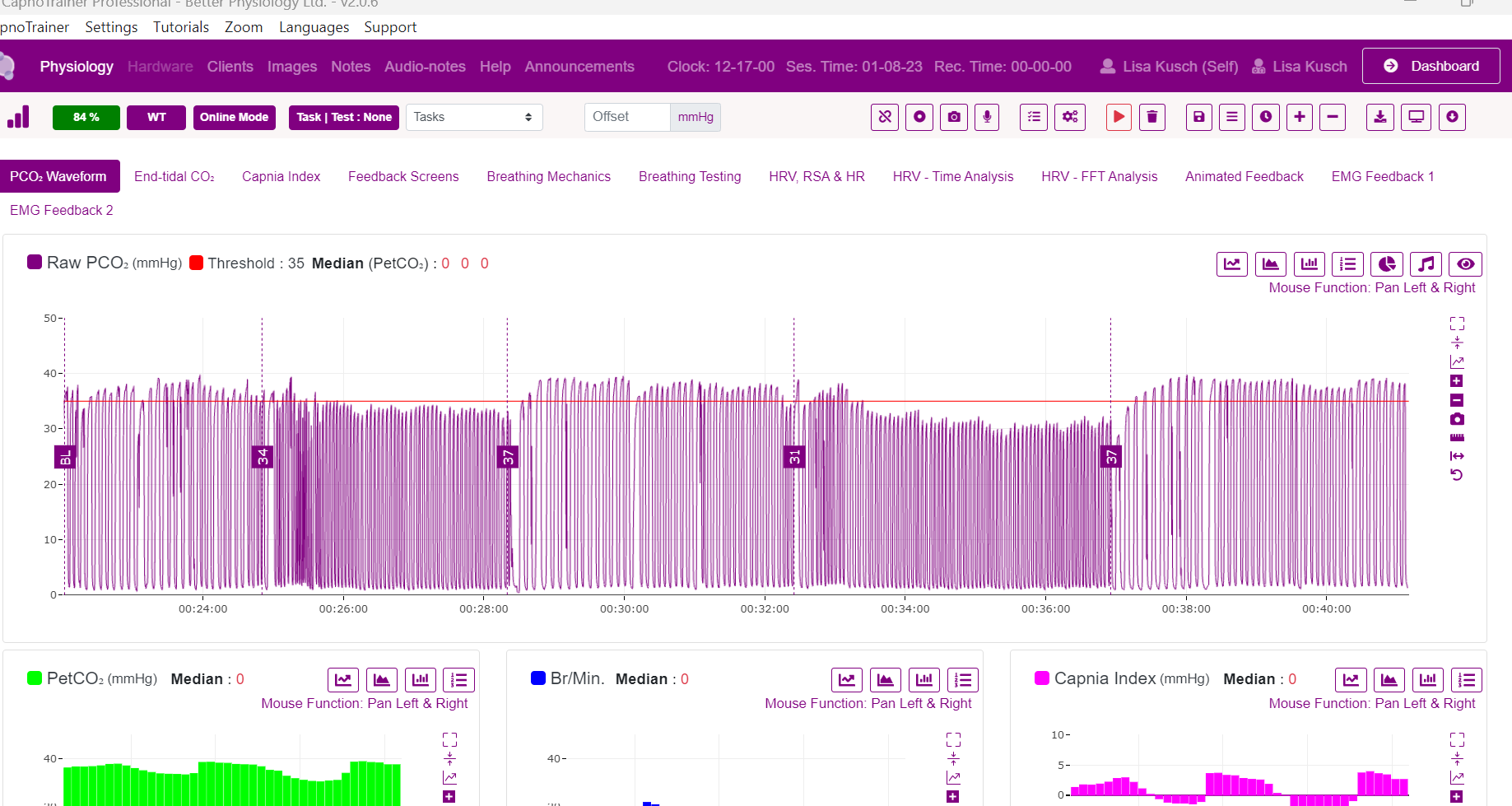
A capnogram is a visual representation of your breathing on a computer screen. Capnography measures the concentration of carbon dioxide as partial pressure in mmHg. Normal levels of CO2 are 35-45 mmHg. Most physiology reference textbooks give a norm of 40 mmHg. Dysfunctional breathing contributes to lower-than-normal carbon dioxide levels. Excessive carbon dioxide levels are uncommon unless the lungs have problems releasing air, such as during an asthma attack or chronic obstructive pulmonary disease.
Capnography allows you to observe your breathing behavior in real-time. Biofeedback enables you to self-regulate your breathing, ensure you do the exercises correctly, and make your recovery efforts unconscious and effortless.
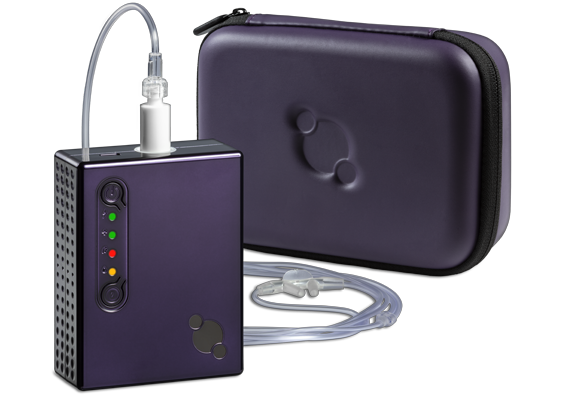
If an office capnometry screening reveals hypocapnia, we will refer you to our breathing behavior specialist for an assessment and treatment plan. You will also be sent home with a Professional CapnoTrainer Go to assist with your breathing retraining plan. Depending on the severity of the hypocapnia and your wellness goals, the Breathing Recovery Plan will begin with weekly online sessions with our breathing behavior specialist.
The capnometer is portable, with Bluetooth capability and an app that downloads onto a cell phone. It can be worn during triggering activities and sleep, allowing us to evaluate and change the carbon dioxide in these conditions.
CapnoTherapy concludes when your carbon dioxide levels are normal during effort, stress, and sleep. This is not a slow or yogic breathing course, nor will you be required to use breathing exercises forever. It is a program to restore essential breathing reflexes to support your active lifestyle.
Hypocapnia Effects
Impaired Memory Consolidation
Hypocapnia can disrupt the brain's ability to consolidate memories during sleep by reducing the quality of slow-wave and REM sleep. Slow-wave sleep is crucial for consolidating declarative memories, while REM sleep is vital for processing procedural memories. Low carbon dioxide levels can impair both stages, leading to forgetfulness and difficulty retaining factual knowledge and learned skills.
Prefrontal Cortex Impairment and Attention Difficulties
Hypocapnia reduces blood flow to the prefrontal cortex, which is a plausible mechanism for impairing functions like attention, decision-making, and impulse control. Some people describe symptoms that resemble attention difficulties, trouble focusing, and poor concentration, though this is a proposed physiological pathway, not an established diagnosis or established causal link to ADHD specifically.
Sleep Apnea Risk
Hypocapnia lengthens obstructive apneas by weakening the body's drive to resume breathing due to low carbon dioxide levels. It also increases central sleep apnea by reducing the brain's natural trigger to maintain regular breathing.
Headaches
Hypocapnia can cause cerebral vasoconstriction, reducing blood flow to the brain and leading to headaches. This constriction and reduced oxygenation can trigger tension-type headaches or migraines, especially after periods of hyperventilation or disrupted breathing during sleep.
Anxiety and Panic Attacks
Hypocapnia worsens anxiety and panic by causing reduced brain oxygen, triggering dizziness and confusion. It also increases brain excitability and activates the "fight or flight" response, leading to symptoms like breathlessness and rapid heartbeat. This intensifies anxiety, creating a cycle of worsening physical and emotional symptoms.
Insomnia
Hypocapnia can cause heightened arousal and difficulty calming the body, leading to insomnia. This occurs because low carbon dioxide levels can disturb the sleep-wake cycle, making it harder to fall and stay asleep.
Frequently Asked Questions
-
Hardshell case
CapnoTrainer Unit
CapnoTrainer charger
Two Cannulas
Two Water Traps
One USB drive (allows your unit to be Bluetooth enabled)
One oxygen ring
Ring charger
-
Open the “Welcome to the CapnoLearning System” email that comes from instruments@betterphysiology.com
Follow the email’s instructions to complete your profile and change your password.
Download the necessary software with your CapnoTrainer for either MAC or WINDOWS at https://www.betterphysiology.com/go-download
Follow the website’s step-by-step instructions on how to connect your CapnoTrainer to the software by entering the Serial Number that comes with your
unit.
Once you have completed your profile and synced your CapnoTrainer to the software; proceed to assemble the CapnoTrainer unit.
-
Open the CapnoTrainer software page and log in
Power on your unit by pressing the top power button and waiting for all lights to turn on.
Take a Water Trap and connect it to the top by making a quarter turn to the right, and then it's locked in.
Connect a cannula to the water tap by making a quarter turn to the right.
Insert your blue USB to your computer BEFORE putting on your cannula.
Make sure USB flashes red and is ready to calibrate with software.
Calibrate your unit by pressing the bottom button until it’s flashing and then letting go.
Connect your device by clicking the top left paper clip logo “connect capno”.
Put on your oxygen ring and click on Bluetooth
Proceed by putting on your cannula. Allow the hose to hang in front, cannula in
the nose, and then over the ears like glasses.
Put on your oxygen ring. It should immediately power on, and your oxygen saturation
will appear on the screen.
As you begin to breathe in through your nose, you should see exhale and inhale graphs on the screen, and you will be ready to proceed!
-
When calibrating your unit, look at your Bluetooth; it should go from red to green to blue.
Red is the initial light.
Green means it’s ready to pair.
Blue means it has paired.
-
Water Traps are not to be thrown out.
Switch them out about every 3 hours of use.
Never leave Water Traps in the machine overnight, nor allow any moisture to collect.
Remove Water Traps after usage and set them to dry overnight.
-
Change your cannula after one usage hour.
-
When storing your unit, remove your cannula to air dry, remove the water trap, unplug your USB, and, most importantly, store your unit UPWARDS, not flat, due to moisture draining.
-
Navigate to www.sleepandbrain.com and click the Book an Appointment tab
Choose the Saratoga Location
Choose Capnotherapy Session 1 hour
-
If you need to reach Lisa and her team for clinical support or scheduling conflicts, please contact her at lisa@sleepandbrain.com.
