Adaptive Oxygen Therapy
Comfort and breath-synchronized delivery are at the core of how we think about supplemental oxygen therapy. For patients who already need supplemental oxygen at night, how it's delivered matters, not just that it's delivered.
In traditional sleep medicine, we apply continuous, high-flow air or oxygen to treat sleep apnea. However, standard continuous-flow devices such as CPAP and continuous nasal cannula oxygen can create friction, dry out the nasal mucosa, and act as a physical irritant. We use a unique oxygen delivery system that respects the breath cycle and nasal cycling so the naturally cool sensation of the gas is detected comfortably, rather than as an irritant.
Breathing begins with the nasal cycle
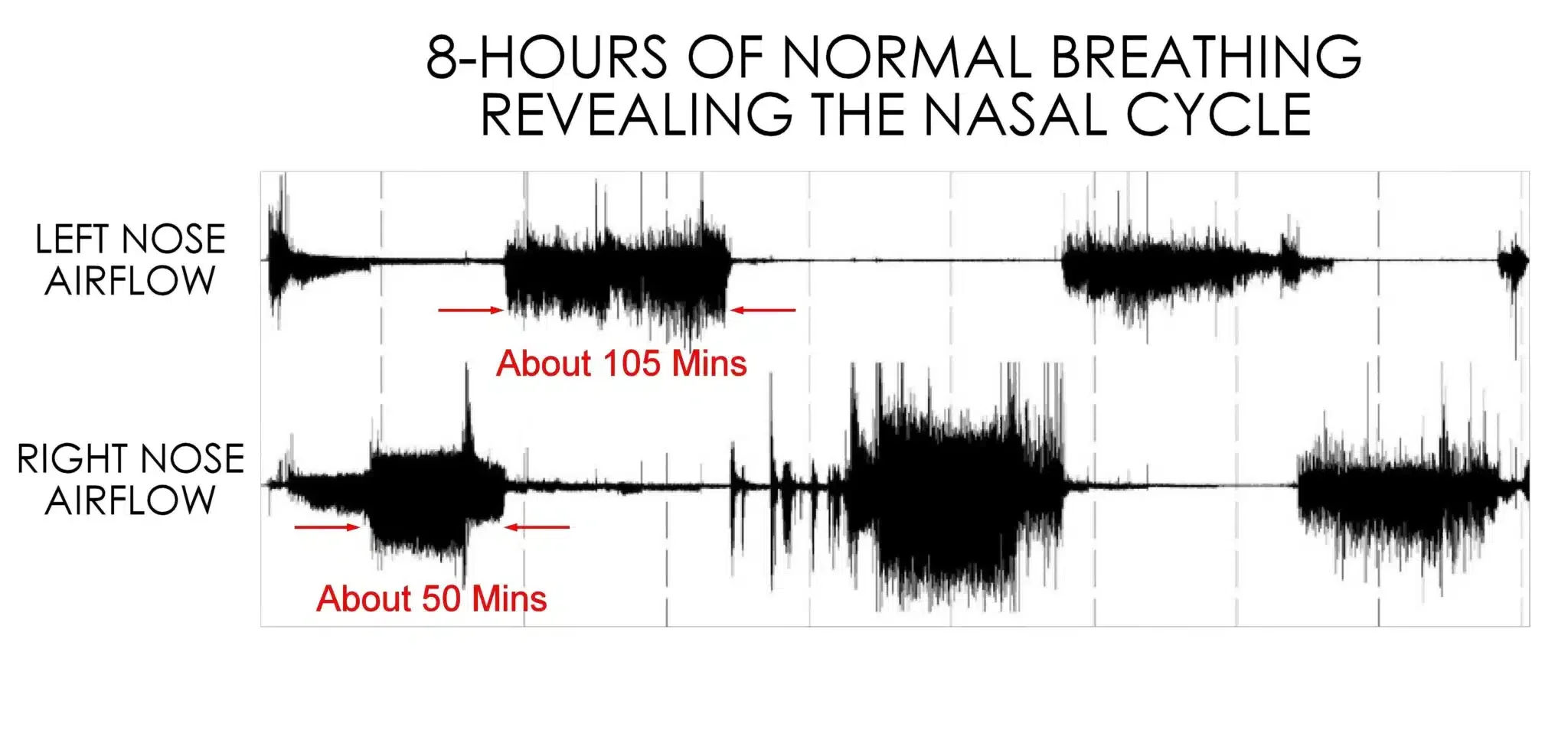
You naturally breathe through one nostril at a time, with airflow going to the dominant nostril, a pattern known as the nasal cycle. We work in harmony with this cycle by detecting nasal resistance and delivering oxygen to the open nostril just before inhalation, resulting in a comfortable therapy experience.
Apogee System
Precise Oxygen Delivery
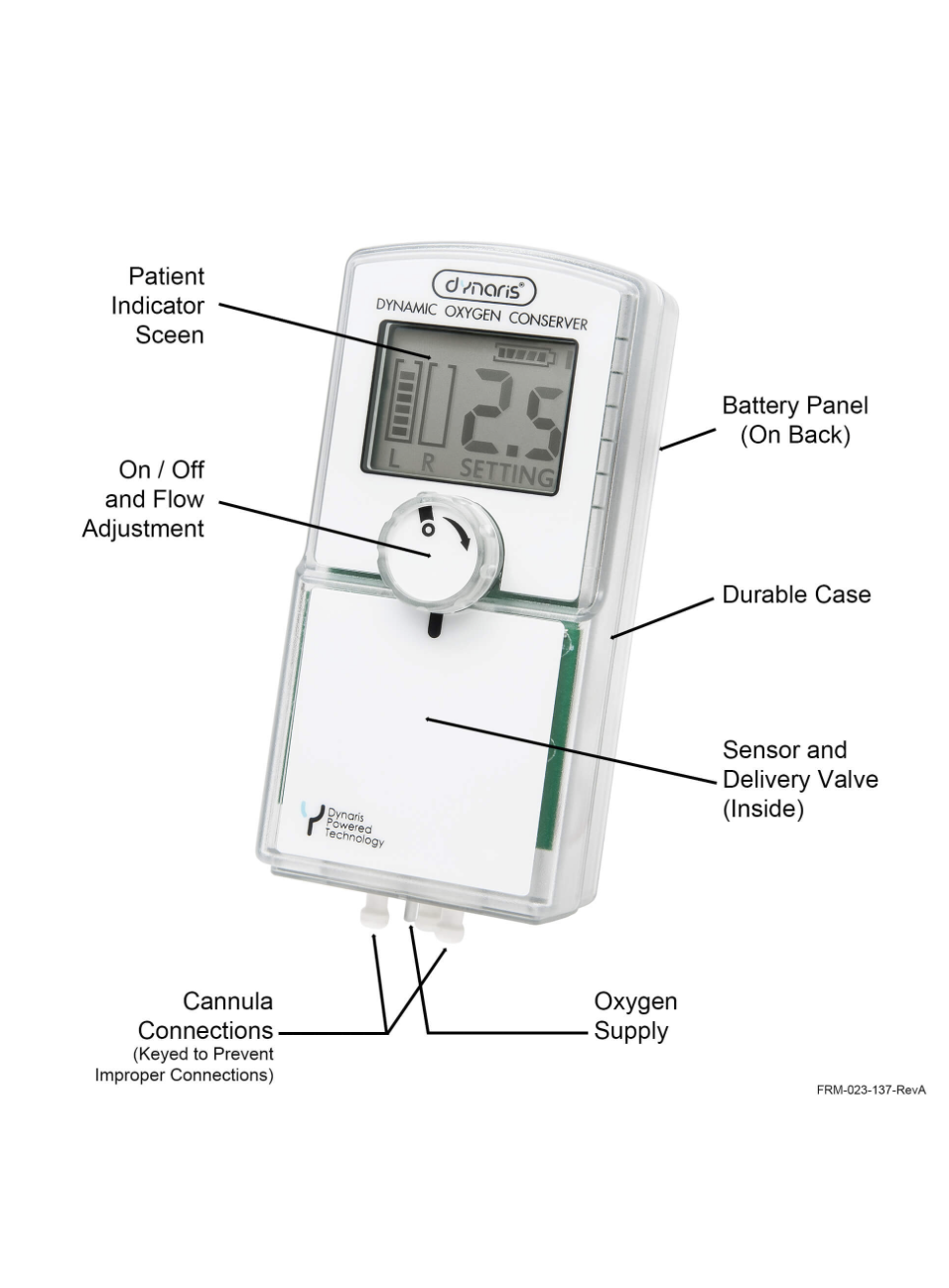
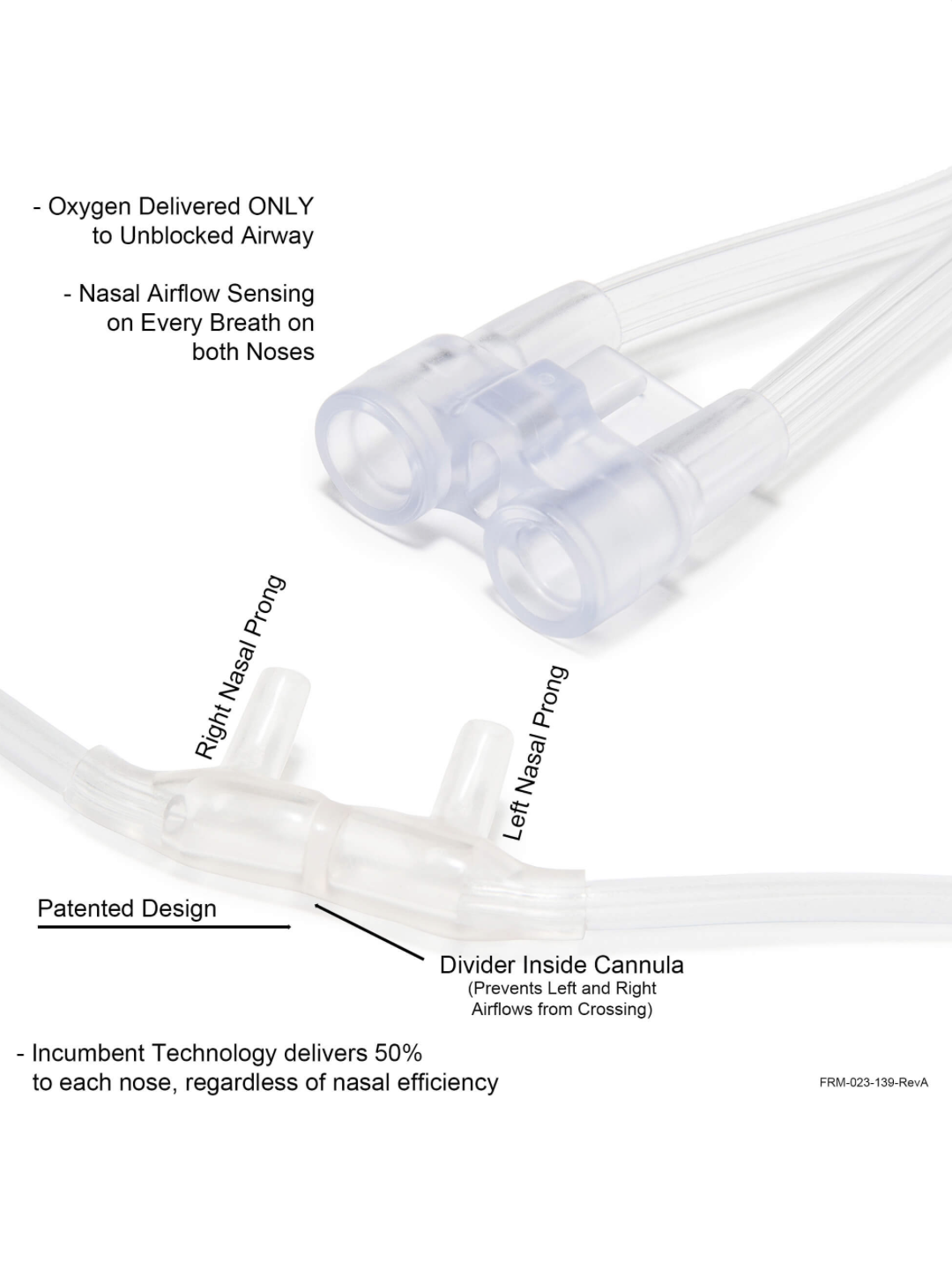
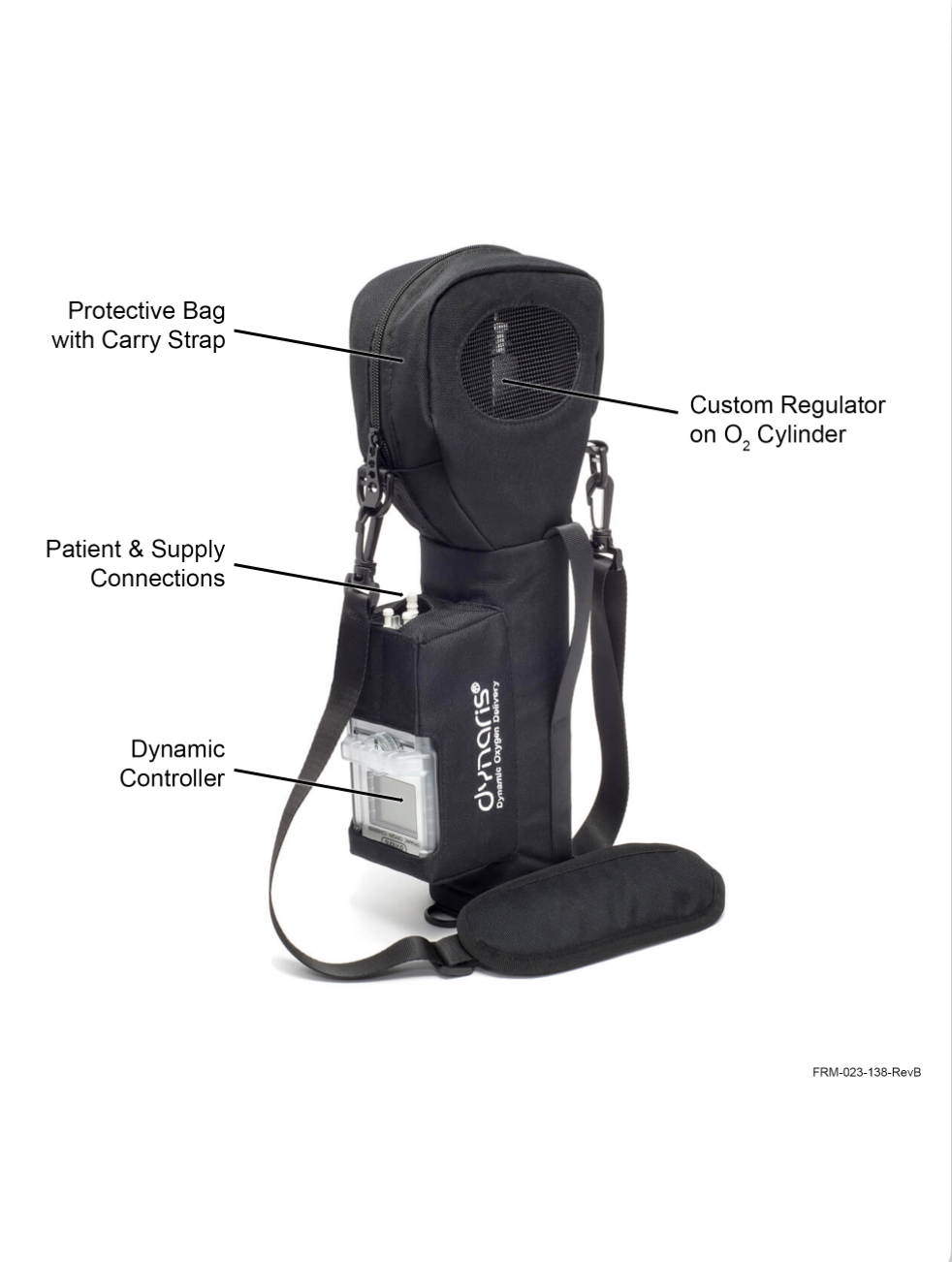
The Apogee System attaches to a small portable cylinder and delivers breath-synchronized pulses of naturally cooled oxygen with precision that no standard cannula can achieve.
The bifurcated nasal cannula enters the left and right nasal airways. Each side is sensed independently on every breath, and the full oxygen pulse is directed to the nostril that is most receptive. The internal divider prevents cross-flow for accurate readings.
Trigeminal Nerve Stimulation
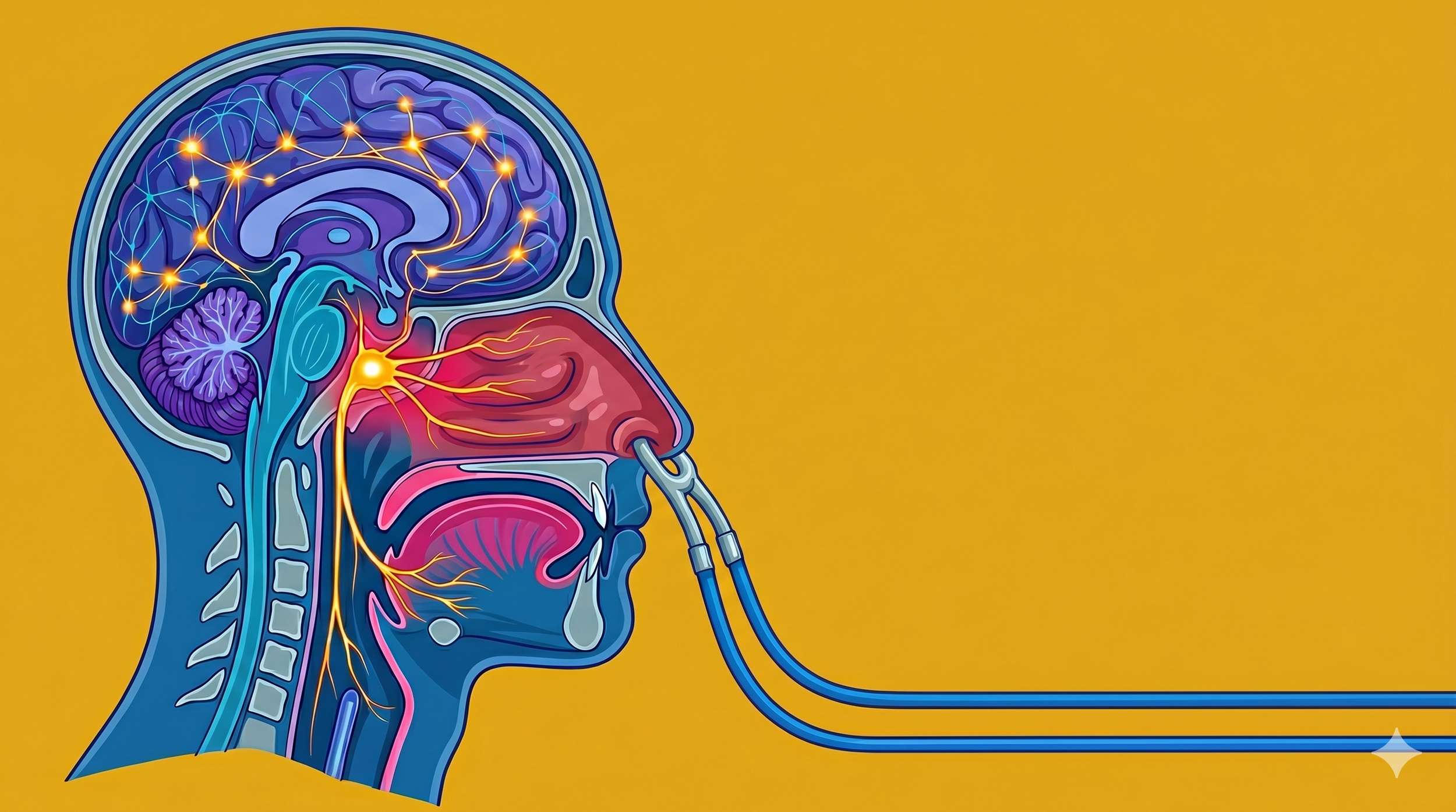
The cool sensation of the gas is detected by cold-sensing receptors in the nasal mucosa, part of the trigeminal nerve's sensory network.
Micro-Dose
The device utilizes an ultra-low flow rate. It is virtually imperceptible, eliminating the friction and mucosal damage associated with standard oxygen therapies.
Breath Cycle
At the millisecond you begin to inhale, the device delivers a microscopic pulse of naturally cooled air. This cooling is detectable by the trigeminal nerve's sensory receptors, the same pathway involved in the mammalian dive reflex.
Nasal Cycle
The system continuously monitors your natural nasal cycle and delivers a gentle pulse of air only to the most open nostril. This preserves your delicate nasal tissue and prevents the irritation that can occur when forcing air through a congested airway.
The Apogee Protocols
Sleep Onset: As you settle into bed, the cool sensation of oxygen flow at the nasal passage can serve as a simple, physical cue, a moment your body learns to associate with the wind-down into sleep.
Sleep: Delivered continuously through the night, dynamic oxygen delivery adapts breath-by-breath to your natural nasal cycle and provides a steady, uninterrupted support for your prescribed oxygen regimen, without the dryness or irritation of a fixed, one-size-fits-all flow.
Upon Waking: That same cool nasal sensation each morning can act as a gentle, consistent signal to start the day, a small ritual anchor as your nervous system transitions out of sleep.
A Sustainable Solution
Because it delivers only supplemental oxygen, not a drug, this device carries none of the dependency or tolerance risks associated with pharmacological sleep aids.
Frequently Asked Questions
-
A note on regulatory status: the Apogee System is FDA-cleared (510(k)) as an oxygen conserving device and is available by prescription. This clearance covers oxygen delivery and conservation, it is not a specific FDA-cleared treatment for insomnia, upper airway resistance syndrome, or other sleep disorders. It's intended for patients who have an existing, physician-prescribed need for supplemental oxygen.
-
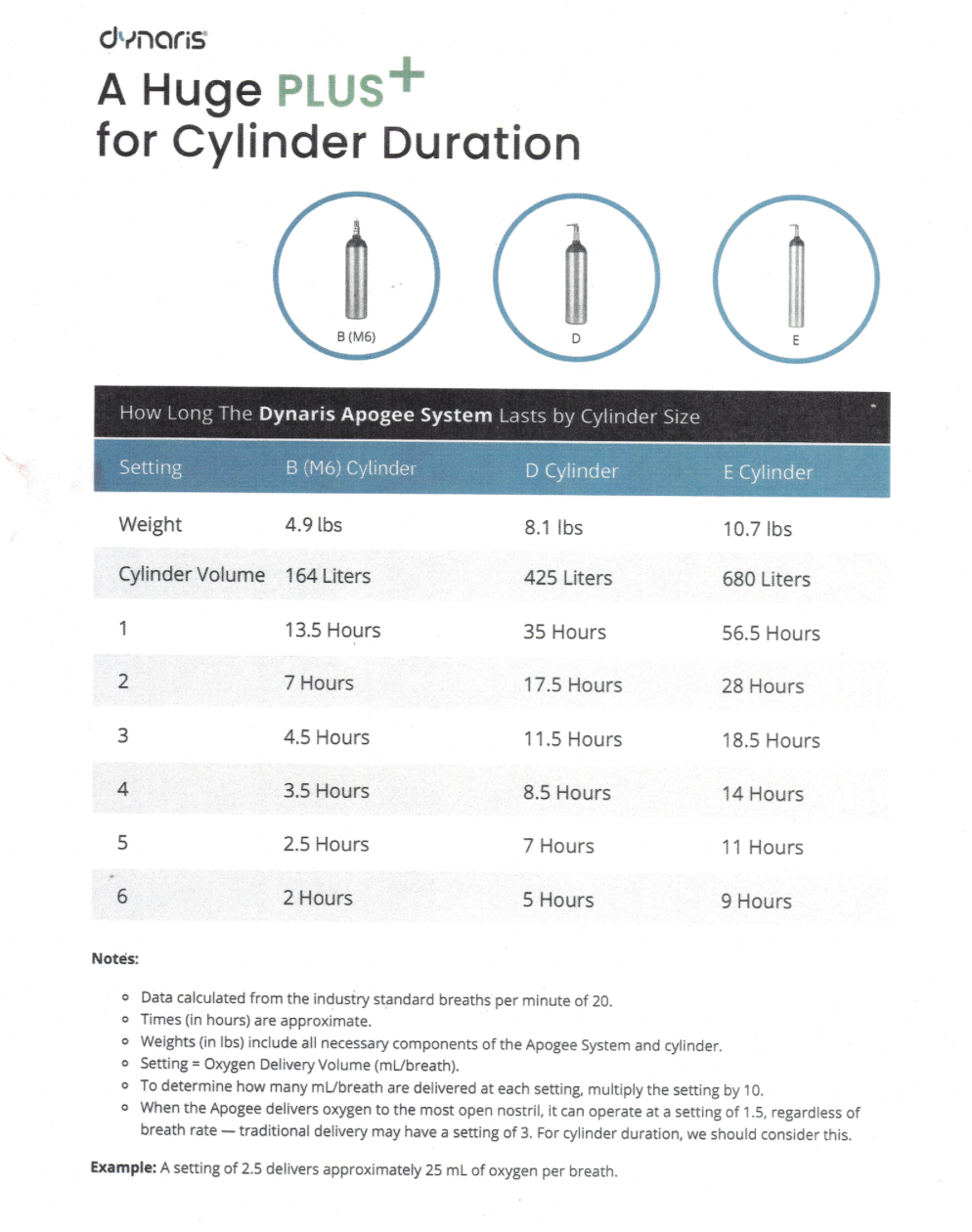
The 1 to 6 dial on the Apogee System represents the clinical therapeutic equivalent of Liters Per Minute (LPM), not the actual continuous volume of air. Because the Apogee is a pulse-dose conserver, it does not blast a continuous stream of air. Instead, it delivers a precise micro-dose (a "bolus") of oxygen at the exact millisecond you inhale. This ensures you get the therapeutic equivalent of 1 to 6 LPM without the massive, continuous physical volume of air that dries out nasal passages.
-
The Apogee utilizes a uniform pulse dose algorithm. It is calibrated to deliver 16 cc (mL) of oxygen per breath, per setting level.
Setting Level & Volume Delivered Per Breath
Setting 1 16 cc
Setting 2 32 cc
Setting 3 48 cc
Setting 4 64 cc
Setting 5 80 cc
Setting 6 96 cc
-
To determine the actual physical volume of air moving through the device in a minute, you multiply the per-breath volume (cc) by your respiratory rate (breaths per minute). Assuming a standard resting breathing rate of 15 to 20 breaths per minute (BPM), the actual physical LPM range is approximately 0.24 LPM on the lowest end to 1.92 LPM on the highest end.
Here is the breakdown at the extremes:
At Setting 1 (The Lowest Setting):
At 15 breaths/min: 16 cc x 15 = 240 cc/min (0.24 LPM)
At 20 breaths/min: 16 cc x 20 = 320 cc/min (0.32 LPM)
At Setting 6 (The Highest Setting):
At 15 breaths/min: 96 cc x 15 = 1,440 cc/min (1.44 LPM)
At 20 breaths/min: 96 cc x 20 = 1,920 cc/min (1.92 LPM)
-
-
-
-
-